Publications
Journal Articles
+ co-first authors; * corresponding author ; trainee
23. Alghamdi EA, Thompson GA, Han S, Toth JM, Berzins DW*. Edge chipping and translucency comparison among lithium silicate-based ceramics. J Prosthodont i. 2026; 1–8. [link]
[ Abstract ]
21. Guentsch, A.*, and S. Han. Augmented Reality Improves Accuracy of Dynamic Computer-Assisted Implant Surgery: An In Vitro Analysis. Clin Oral Invest 37, 7 : 896–904 (2026). [link]
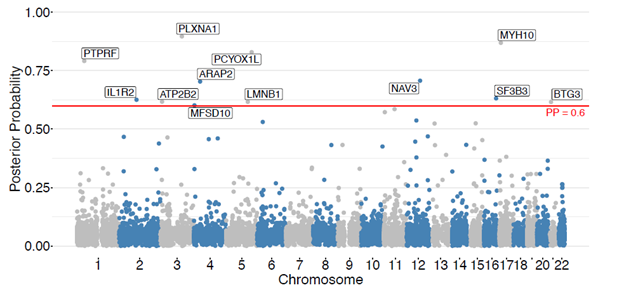
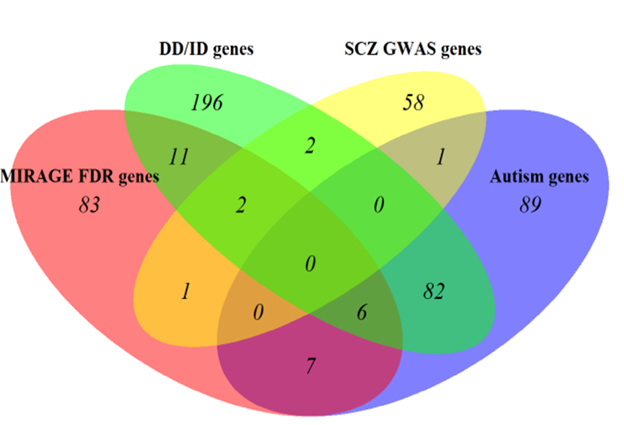
20. Han S+*, Sun X+, Sloofman L+, Satterstrom FK, Xu X, Liang L, Knoblauch N, Sheng W, Zhao S, Nguyen TH, Wang G; Autism Sequencing Consortium; Buxbaum J, He X*. MIRAGE: a Bayesian rare variant association analysis method incorporating functional information of variants. Am J Hum Genet., Volume 113, Issue 1, 2026, Pages 168-183, ISSN 0002-9297, https://doi.org/10.1016/j.ajhg.2025.11.013. [link] [R package] [PDF]
[ Abstract ]
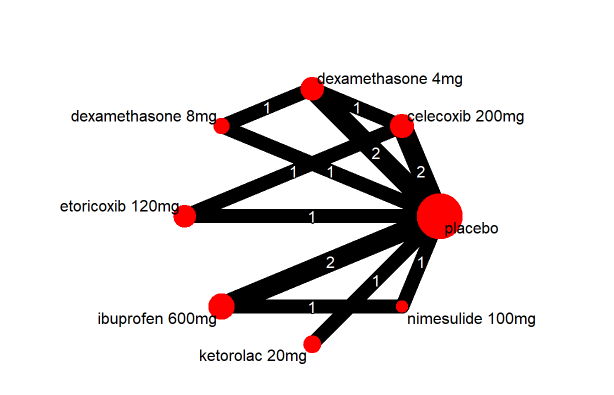
19. Gousias, C., Alsuwaiyan, Z., Fial, A., Han, S., Tatakis, D.N., and Kofina, V.* Pre-Emptive Analgesia for Periodontal and Implant-Related Surgery: A Systematic Review and Meta-Analysis. J Clin Periodontol (2025). [link]
18. Vrisiis Kofina*, Juan Valencia Rincon, Swati Y. Rawal, Andrew R. Dentino, Shengtong Han, Dimitris N. Tatakis. Implant placement-associated tissue swelling: a digital three-dimensional and patient-based assessment. Clin Oral Invest 29, 212 (2025). [link]
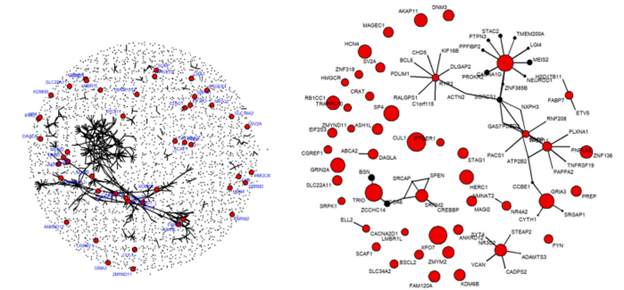
17. Shengtong Han*, Marieke Gilmartin, Wenhui Sheng, Victor X. Jin. Integrating rare variant genetics and brain transcriptome data implicates novel schizophrenia putative risk genes. Schizophrenia Research, Volume 276, 2025, Pages 205–213, ISSN 0920-9964. [link] [PDF]
16. Gonzalez C, Badr Z, Güngör HC, Han, S , Hamdan MD. Identifying primary proximal caries lesions in pediatric patients from bitewing radiographs using artificial intelligence. Pediatr Dent, 2024:46(5). [link]
15. Han, S*. Bayesian Rare Variant Analysis Identifies Novel Schizophrenia Putative Risk Genes. Journal of Personalized Medicine, 2024, 14, 822. https://doi.org/10.3390/jpm14080822 [link]
14. Vidyalakshmi Subramanian, Howard W. Roberts, Shengtong Han , Stephanie J. Sidow, David W. Berzins. Electrochemical Properties of Nickel-Titanium Rotary Endodontic Instruments, Journal of Endodontics, 2024,ISSN 0099-2399, https://doi.org/10.1016/j.joen.2024.05.004. [PDF] [link]
13. Al-Bitar KM, Garcia JM, Han S , Guentsch A. Association between periodontal health status and quality of life: a cross-sectional study. Front Oral Health. 2024 Jan 25;5:1346814. doi: 10.3389/froh.2024.1346814. PMID: 38333564; PMCID: PMC10850382. [link]
12. Zaid Badr, Manal Hamdan, Shengtong Han , Taiseer A Sulaiman. Effect of surface finish and resin cement on the bond strength to CAD/CAM ceramics for interim resin-bonded prostheses . The Journal of Prosthetic Dentistry, 2024, ISSN 0022-3913, https://doi.org/10.1016/j.prosdent.2023.12.006. [PDF][link]
11. Manal Hamdan, Zaid Badr, Jennifer Bjork, Reagan Saxe, Francesca Malensek, Caroline Miller, Rakhi Shah, Shengtong Han , Hossein Mohammad-Rahimi. (2023), Detection of dental restorations using no-code artificial intelligence . Journal of Dentistry . 2023, 104768, ISSN 0300-5712, https://doi.org/10.1016/j.jdent.2023.104768 [PDF][link]
10. Katherine C. Schacherl, Shengtong Han , John A. Schacherl, Andrew Dentino. (2024), Unstable Periodontal Disease and its Association with Sleep-Disordered Breathing (SDB) . Gen Dent. 2024 Jan-Feb;72(1):16-25. PMID: 38117637. [PDF] [link]
9. Guentsch, A., Bjork, J., Saxe, R., Han, S. and Dentino, A.R. (2023), An in-vitro Analysis of the Accuracy of different Guided Surgery Systems – They are not all the same . Clin Oral Impl Res. 2023 May;34(5):531-541. doi: 10.1111/clr.14061. Epub 2023 Mar 17. PMID: 36892499. [Link]
8. Gaussian Bayesian network comparisons with graph ordering unknown
Hongmei Zhang, Xianzheng Huang, Shengtong Han, Faisal I. Rezwan, Wilfried Karmaus, Hasan Arshad, John W. Holloway. Computational Statistics and Data Analysis, 2021, 157, 107156. [PDF] [Link][R-package]
7. Jump-seq: genome-wide capture and amplification of 5hmC sites
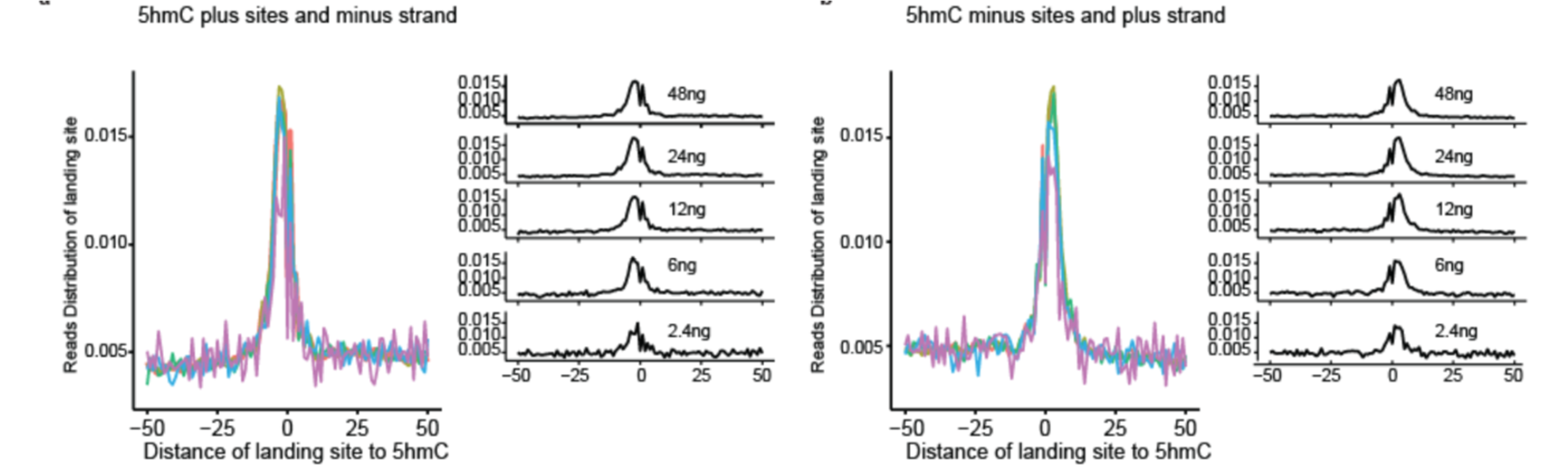
Lulu Hu+, Yuwen Liu+, Shengtong Han+, Lei Yang+, Xiaolong Cui, Yawei Gao, Qing Dai, Xingyu Lu, Xiaochen Kou, Yanhong Zhao, Wenhui Sheng, Shaorong Gao, Xin He, and Chuan He. Journal of the American Chemical Society, 2019, 141(22), 8694–8697. [PDF] [Link]
6. The nested joint clustering via Dirichlet process mixture model
Shengtong Han*, Hongmei Zhang, Wenhui Sheng, Hasan Arshad. Journal of Statistical Computation and Simulation, 2019, 89, 815-830. [PDF][Link]
5. Adjusting background noise in cluster analysis of longitudinal data
Shengtong Han, Hongmei Zhang, Wilfried Karmaus, Graham Roberts, Hasan Arshad. Computational Statistics and Data Analysis, 2017, 109, 93-104. [PDF][Link]
4. An efficient Bayesian approach for Gaussian Bayesian network structure learning
Shengtong Han, Hongmei Zhang, Wilfried Karmaus, Graham Roberts, Hasan Arshad. Communications in Statistics-Simulation and Computation, 2017, 46, 5070-5084. [PDF][Link]
3. Identifying heterogeneous transgenerational DNA Methylation sites via clustering in Beta regression
Shengtong Han, Hongmei Zhang, Gabrielle A. Lockett, Nandini Mukherjee, John W. Holloway, Wilfried J.J. Karmaus. The Annals of Applied Statistics, 2015, 9, 2052-2072. [PDF][Link]
2. A Full Bayesian Approach for Boolean Genetic Network Inference
Shengtong Han, Raymond K. W. Wong, Thomas C. M. Lee, Linghao Shen, Shuo-Yen R. Li, Xiaodan Fan. PLoS ONE, 2014, 9(12): e115806. doi:10.1371/journal.pone. 0115806. [PDF][Link]
1. Smoothing Spline Estimation for Partially Linear Single-index Models
Bartholomew Leung, Heung Wong, Riquan Zhang, Shengtong Han. Communications in Statistics-Simulation and Computation, 2010, 39, 1953-1961. [PDF][Link]
Book Chapters
1. A Nested Clustering Method to Detect and Cluster Transgenerational DNA Methylation Sites Via Beta Regressions
Jiajing Wang, Hongmei Zhang, Shengtong Han. Modern Statistical Methods for Health Research, Springer, 2021. [Link]